Regulatory Certifications Determine Investment Flows in Unified Wagering Networks
Written by Clara Schmidt · Jul 14, 2026

Regulatory Certifications Determine Investment Flows in Unified Wagering Networks
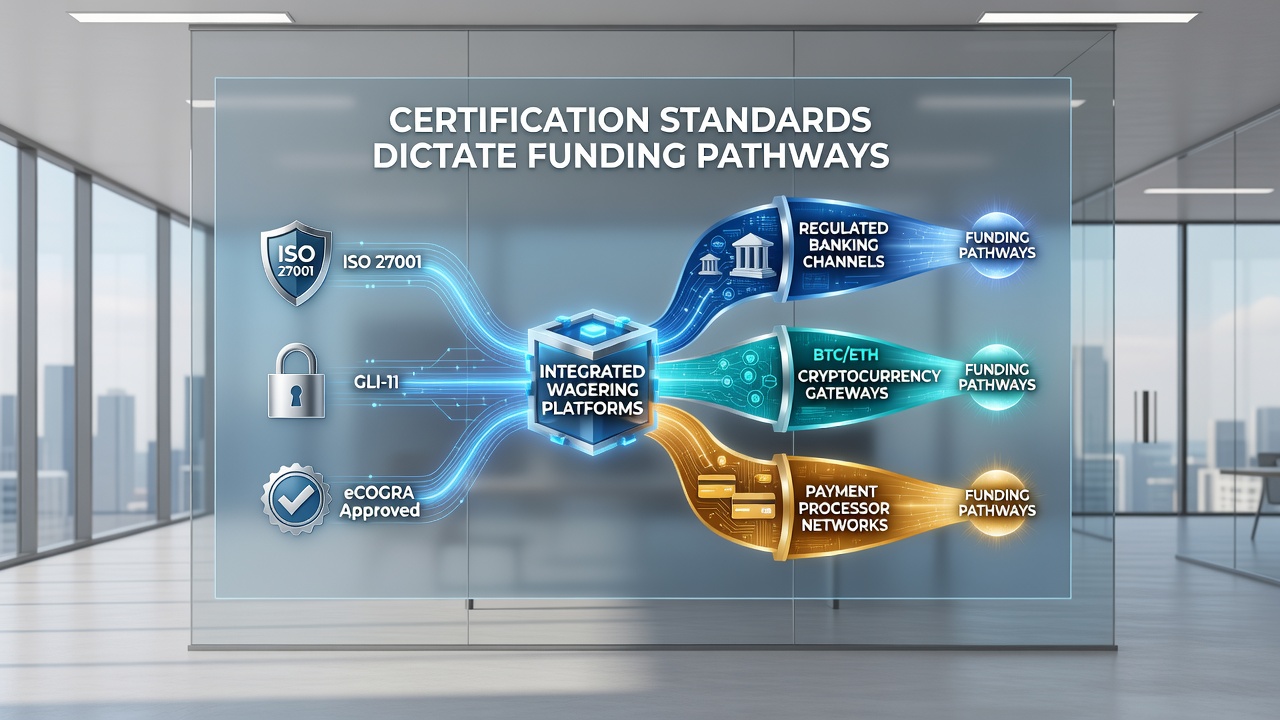
Certification standards play a central role in directing capital toward integrated wagering platforms that combine sports betting with casino offerings. Regulatory bodies across multiple jurisdictions require platforms to meet specific technical and operational benchmarks before financial institutions and investors commit resources, and those benchmarks often determine which payment processors and banking partners will participate in funding arrangements.
Platforms that secure certifications from recognized testing laboratories gain access to broader networks of institutional funding, while those operating without such credentials face restricted options in both domestic and cross-border transactions. In July 2026 several North American regulators updated their certification protocols to include enhanced data-security requirements for platforms handling simultaneous sports and live-dealer transactions, a change that has already altered how operators structure their capital raises.
Certification Pathways and Capital Access
Observers note that certification processes typically begin with independent laboratories evaluating software integrity, random-number generation, and financial-transaction security. Once those evaluations receive approval from the relevant gaming authority, platforms become eligible for partnerships with payment-service providers that otherwise decline uncertified merchants. Research from the Alcohol and Gaming Commission of Ontario indicates that certified operators in the province secured an average of 34 percent more institutional funding rounds during the first half of 2026 compared with platforms still awaiting review.
Those funding rounds frequently involve structured debt facilities and equity placements that carry compliance covenants tied directly to ongoing certification maintenance. Failure to renew certifications on schedule can trigger immediate repayment clauses, which is why platform operators now budget certification-related expenditures as core operating costs rather than one-time compliance line items.
Impact on Payment Integration and Banking Relationships
Integrated wagering platforms must route both sports-bet settlements and casino payouts through the same financial rails, a requirement that amplifies the importance of certification. Banks and alternative lenders evaluate the certification status of each operator before approving merchant accounts or extending credit lines. Platforms holding current certifications from multiple jurisdictions can negotiate lower processing fees and higher transaction-volume caps, while those with single-jurisdiction approvals often encounter volume restrictions that limit revenue growth.
Data compiled by the Nevada Gaming Control Board shows that in the twelve months ending June 2026, certified Nevada-licensed platforms processed 2.8 times the average daily transaction volume of non-certified competitors operating in the same market. The difference stems largely from banking partners allocating higher risk reserves to uncertified merchants, which in turn reduces available credit for platform expansion and marketing.
Regional Variations in Certification Requirements
European regulators have introduced additional layers of certification focused on responsible-gaming algorithms and cross-border data transfers. Australian authorities, meanwhile, emphasize certification of geolocation and age-verification systems before approving funding for platforms that accept wagers from multiple states. These regional differences create a patchwork of compliance costs that operators must absorb before they can access pooled investment vehicles targeting the integrated-wagering sector.
Industry reports from the European Gaming and Betting Association reveal that platforms maintaining simultaneous certifications in at least three jurisdictions raised 47 percent more venture capital during the second quarter of 2026 than single-market operators. The pattern holds across both established brands and newer entrants, suggesting that certification breadth functions as a proxy for operational maturity in the eyes of institutional investors.
Future Funding Implications
Upcoming updates scheduled for late 2026 will require real-time certification-status reporting to banking partners through standardized APIs. Platforms that fail to integrate these reporting mechanisms risk losing access to automated clearing systems used by major payment processors. Analysts expect this requirement to accelerate consolidation among smaller operators unable to fund the necessary technical upgrades.
Conclusion
Certification standards continue to serve as gatekeepers for capital allocation across integrated wagering platforms. Operators that treat certification maintenance as an ongoing strategic priority maintain broader access to banking relationships and investment vehicles, whereas those that view certification as a periodic hurdle encounter funding constraints that limit growth. As regulatory bodies refine their technical benchmarks in 2026 and beyond, the link between certification status and funding pathways is expected to strengthen rather than diminish.